Work experience at National Slate Museum, 2026

Lloer and Becca, work experience students, 14 July 2026

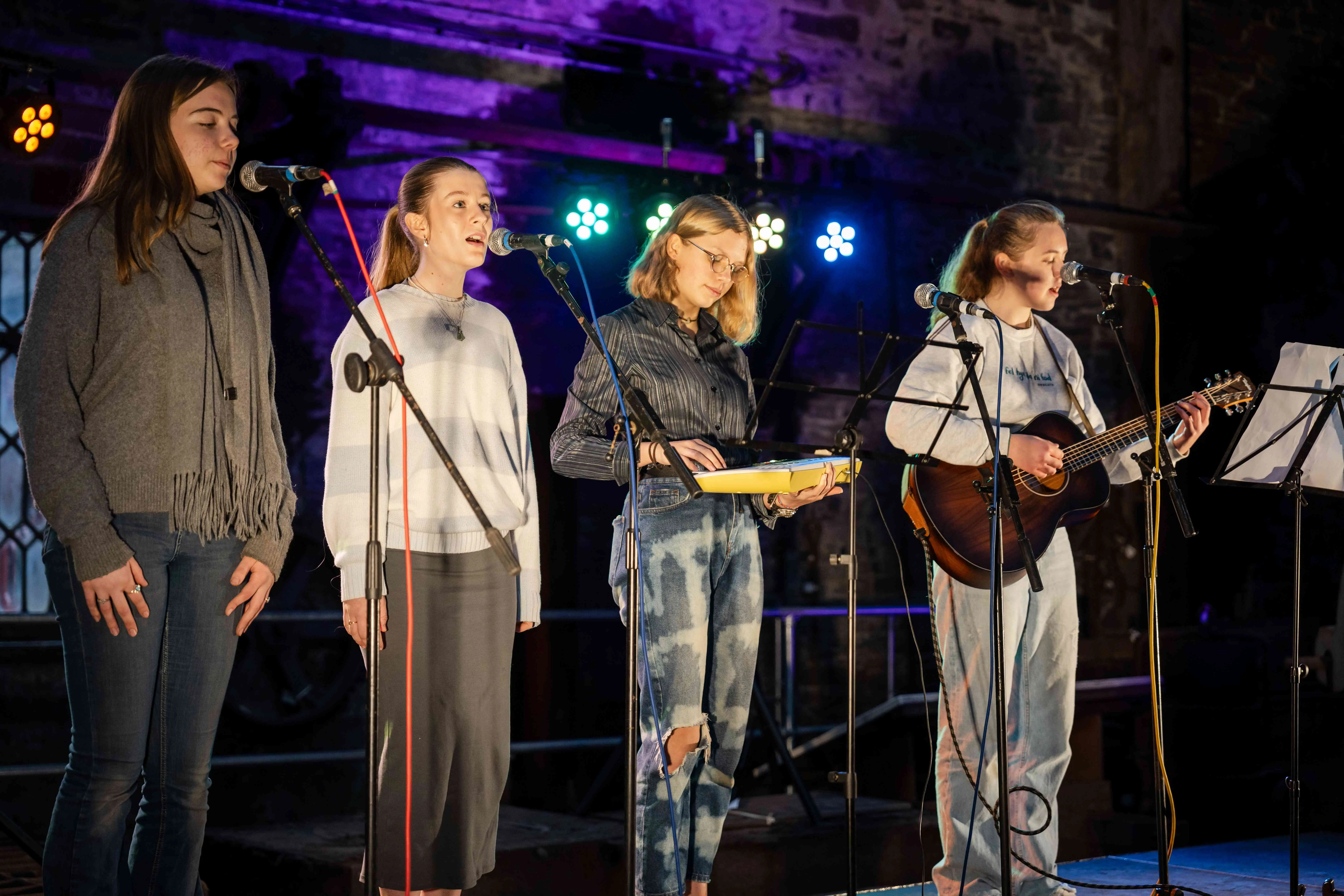
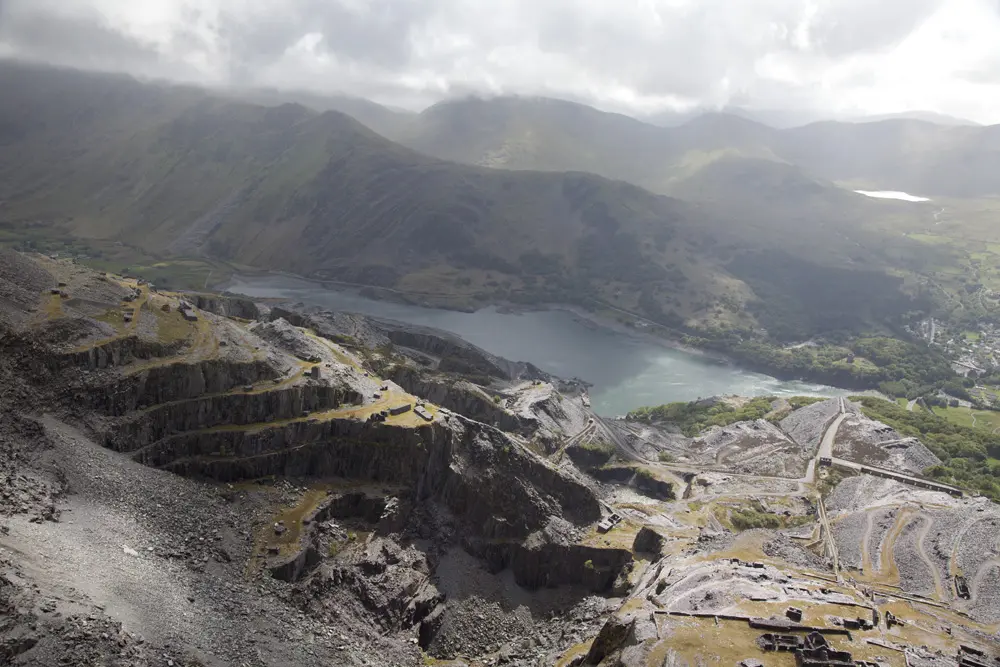
During this year's work experience week at the National Slate Museum, the students were asked to keep a record of their experience and to write a blog. This is the format the students chose! Click on the pictures on the right, or read below about Becca and Lloer's experiences!

Day 1

We had an introduction from Chloe and we also got lanyards that show we are on our placement here. We went to the quarry hospital to help out, making a video on how to get to the quarry so that more people are interested in coming to the area. Even though we didn't do that much today, it was a good ease into how the work environment is. We learnt that museums are very complicated behind the scenes and have a lot of jobs within them that make it up. It was very quiet and there weren't that many visitors in the quarry hospital so we are hoping the video makes people want to go. We realised there are a majority of English people going and visiting these places which is good that they want to learn about the history but surprisingly Welsh people themselves do not want to go and learn their own history. At the end of the day we looked at the beautiful view that the quarry hospital looks over and got to know each other, since we didn't know each other before today. 

Day 2

On day 2 we started off with an admin task where we learned more about using excel to maintain information and numbers. We used excel to type up the stats from old visits from e.e 1967. We learned that details like this can be useful in terms of patterns and what needs to be improved about the event or task. We also helped Lowri create an activity for young children which was very helpful to me as I learned that there is many jobs within one company that you would never expect for example we later helped Mari who works in the education department with Lowri to go down to storage, she works part time which was something I didn't know you could do when working as an adult but it was interesting and useful to know that there's always a job or opportunity that can suite everyone which would be great for when just starting of your career. We later had an opportunity to have a meeting with Amgueddfa Cymru about the importance of using both languages equally, which was very interesting because we learned that it really is helpful to be bilingual as it provides more job opportunities. 

Day 3

This was one of the most exciting days of the week, actually being able to go into the slate museum while closed. But at the start of the day we helped Lois by making a plan on how to get children and parents aware of the nature trail Amgueddfa Cymru has to offer. We brainstormed together until our early lunch break. Then we went down to the construction site to get protective gear so everyone was safe during the tour. We also had to take other safety precautions like wearing trousers and walking shoes. The tour was really fun and we both helped keep everyone together but it was extremely hot that day so it was really hard to focus. After the tour Chloe treated us both to ice cream, we both got cookie dough, and it was very lovely and helped with the heat. After we walked back up to the quarry and filmed a tiktok on the nature trail before having to leave. We learnt about preservation and how important and how much work goes into preserving museums and showed the careful work they have to do to get everything right to tell the story of the museum. 

Day 4

On day four we went to Castell Penrhyn. We had a walk around the castle however later learned more about the history of the castle and the history of the Penrhyn family which I we learned is a big part of having a museum or a historical land because although people love going to castell Penrhyn, most people see it as walking around a beautiful house instead of looking at the good and bad parts of the castles history, for instance the slavery in the 18th-19th century. We think its very important to the visitors to know what really went on instead of only seeing it as a house. We then watched a slate demo and then helped people complete a survey about the experience and their past visits of the museum in Llanberis which was very good to see how useful surveys can we when running a company because it allows the company to see the visitors opinions and thoughts about what they offer, it also helps to know what the company need to promote or do better. 

Day 5

Our last day here at Amgueddfa Cymru, we started the day by summarizing how the week has been and what we have done and learnt. We wrote this blog and will after create a blog on the importance of the slate history in Penrhyn castle. Afterwards we will make a few promotional social media videos before leaving early. This work experience has shown us a lot and helped us realise the importance and how museums work behind the scenes and given us skills like talking to new people, teamwork and helping others. And we weren't really shocked how museums work and is exactly how we pictured working at a museum was like. 

Logo full of funder logos

National Meadows Day 4th July 2026

Hannah Jenkins, 8 July 2026

In celebration of National Meadows Day, we’re sharing the story of the Urban Meadow at National Museum Cardiff, which is 13 years old this year!

Meadows are habitats dominated by native grasses and flowers, traditionally managed by a single annual hay cut and grazed by animals during the autumn and winter. They are diverse habitats that support a wide range of plants, animals and fungi however, the amount of land managed in this way has significantly decreased. In Wales, meadows are an example of a priority habitat of principle importance as they are under threat from changes to management, climate change and invasive species.

The urban meadow beside National Museum Cardiff was created in 2013. This patch of grass has been transformed from an area once described as species poor to one full of different species of grass and native wildflowers. It provides a haven for wildlife, enhancing the biodiversity around our site and, within the city, it also helps to form a green corridor for nature, linking up other green spaces across Cardiff and beyond.

Early Transformation of the meadow

Early ransformation of the meadow

Early transformation of the meadow

Early transformation of the meadow

The meadow is now a lovely example of neutral semi-improved grassland in the centre of Cardiff. Cowslips (Primula veris), daffodils (Narcissus) and cuckoo flower (Cardamine pratensis) in spring are followed by familiar meadow species such as ox-eye daisy (Leucanthemum vulgare), clovers (Trifolium spp.), meadow buttercup (Ranunculus acris) and knapweed (Centaurea) along with grasses such as sweet vernal grass (Anthoxanthum odoratum), crested dog’s-tail (Cynosurus cristatus) and Yorkshire fog (Holcus lanatus). Last year we recorded, corky-fruited water-dropwort (Oenanthe pimpinelloides), a new species for the Urban Meadow, and one which is uncommon in Wales.

The Urban Meadow in Summer

The Urban Meadow in Summer

Hoverfly on buttercup flower

Hoverfly on buttercup flower

All meadows need some annual maintenance to keep them in good condition and although we have followed the traditional regime of a single annual cut, as the years have gone by, we have seen some dominant grasses such as false oat grass (Arrhenatherum elatius) start to establish.

In autumn 2024, we added yellow rattle seed (Rhinanthus minor) with the help of funding from the National Heritage Lottery Fund GROW project. This annual plant is semi-parasitic and can play an important role in helping to keep a healthy balance between grass and wildflowers. As it grows, it takes nutrients from the roots of surrounding grasses, in turn weakening and reducing their dominance and allowing space for wildflower species to spread.

The common name comes from its yellow flowers, forming round seed pods in summer which rattle when the seeds are ripe! It is also known as “the Meadow Maker” owing to its reputation for increasing floral diversity.

Yellow rattle seedling in May 2025

Yellow rattle seedling in May 2025

Yellow rattle flower in June 2025

Yellow rattle flower in June 2025

The native wildflowers found on the meadow provide an important source of pollen and nectar for insects and butterflies, but it is the variety of grasses and flowers together that ensure it provides food, shelter and habitat for many other species too! The leaves, stems and roots can be just as important.

In recent years we have recorded pollinators including hoverflies, bees – solitary, honey and bumble, wasps, butterflies, moths and beetles. We have also spotted spiders, grasshoppers, caterpillars, dragonflies, woodlice, slugs and snails… the list could go on!

A male swollen thighed beetle

A male swollen thighed beetle

ox-eye daisy

They are good pollinators, visiting a variety of open faced flowers such as this ox-eye daisy.

Some recent records include Swollen thighed beetle (Oedemera nobilis), Cinnabar moth caterpillars (Tyria jacobaeae) which feed primarily on Ragwort leaves (Jacobaea vulgaris) and Essex Skipper Butterfly (Thymelicus lineola). Day flying moth visitors include Six spot burnet moth (Zygaena filipendulae) and spotted on different occasions last year Hummingbird Hawk Moth (Macroglossum stellatarum), which visits Wales from southern Europe in the summer.

Cinnabar moth caterpillars

Cinnabar moth caterpillars

Essex skipper butterfly

Essex skipper butterfly

Six spot burnet moth

Six spot burnet moth

A number of different habitats have also been created to provide more opportunities for wildlife around the meadow.

Meadow image 1
Meadow image 2

It’s not just insects that visit the meadow, groups of Starlings (Sturnus vulgaris) can often be seen wandering through searching for insects and one evening recently, a hedgehog (Erinaceus europaeus) was spotted beside the meadow.

Our Natural Science Curators have created resources to help you identify plants, animals, rocks and fossils on your doorstep. You can find them on our website: Spotter’s Guide | Museum Wales

A Garden Full of Roses and History

Elin Barker, Garden Conservator, 22 June 2026

At St Fagans National Museum of History, the rose garden, or Rosery, is full of colour and scent during the summer. But behind the beauty, there is a lot of hard work, and a long and interesting story.

The first Rosery was planned in 1898 by Hugh Pettigrew, the head gardener at the time. It had winding grass paths, trellises with climbing roses, and a canal planted with water lilies and filled with ornamental fish. More than 100 types of roses were planted in the garden.

After the First World War, the Rosery was not looked after. The canal was filled in, and the trellises and pergolas were removed. In the 1940s, after the Plymouth family donated St Fagans Castle and grounds to the Museum, a simpler rose garden was created, with triangular beds.

In 1998, the Museum decided to restore Pettigrew’s original design. The old canal was dug out and replanted with water lilies. The triangular beds were removed, and new curved beds were laid out around the canal, following Pettigrew’s plan. Roses were chosen carefully, based on a list made by Pettigrew in 1904.

However, over time, many of the old roses became unhealthy. They suffered badly from a disease called black spot, which makes the leaves turn yellow, develop black spots and fall off. Before the Clean Air Act of 1956, black spot was rare because the air was full of sulphur from pollution, which helped protect the plants. But when the air became cleaner, black spot became a much bigger problem.

In 2017, the Rosery was replanted again. This time, many modern roses were used, strong, healthy plants that flower for a long time and still have the beauty and scent of traditional roses. Most of the roses are from David Austin, a famous rose breeder. One special rose growing in the garden is called ‘Roald Dahl’, named after the famous author who was born in Cardiff.

We still garden in the spirit of the Edwardian period, because most of the ornamental gardens at St Fagans date back from that time. The Edwardians loved roses - and so do we! But looking after them is not always glamorous. Every January, the gardeners prune the roses hard to keep them healthy. Then the beds are mulched with manure, we add manure to the soil to feed it. Healthy soil helps the roses to grow strong and healthy.

Throughout the summer, the gardeners deadhead the roses to encourage more flowers, but they leave some blooms to make rose hips, which are used to decorate the historic houses in winter. Around the roses, there are also flowering perennial plants like lavender and violas planted to help pollinators like bees and butterflies. 

Some roses, called single roses, have fewer petals and an open centre. These are better for insects because bees can easily reach the nectar and pollen. Some of our favourites include roses called ‘Tottering-by- Gently’ and ‘Starlight Symphony’.

Today, the Rosery is full of colour and scent. The new roses look and feel like old roses, but they flower again and again through the summer. They remind us of the love, care, and hard work that goes into keeping a garden full of life.

Ann Francis

Alastair Willis, 18 June 2026

This treasure is now on display at the National Waterfront Museum, Swansea until June 2027.

What was the Ann Francis shipwreck?

The Ann Francis was an Elizabethan merchant ship returning home to Norfolk from Spain, and wrecked on Margam beach (near Port Talbot) in December 1583. This article tells the story of what happened in the immediate aftermath of the wreck, and its rediscovery 400 years later, as well as looking in detail at some of the objects.

What has been discovered from the Ann Francis shipwreck?

Amgueddfa Cymru – Museum Wales has just acquired a spectacular collection of coins and artefacts. These were discovered by Peter Hughes, a metal detectorist, between 1996 and 2017. They include about 870 gold and silver coins, as well as personal belongings, ship’s equipment, and cooking, eating and drinking utensils, all dating to the late-15th to 16th century.

Finds from Margam Beach associated with the Ann Francis shipwreck

These add to previously acquired items found at the same beach as far back as the 1970s, such as navigational compasses, more coins and a bosun’s whistle, all indicating the presence of a 16th-century wreck. Research by local historians, archaeologists and curators in the 1970s to 1990s revealed the wreck to be from a ship called Ann Francis.

Copper Alloy Nautical Dividers
Tudor pewter boatswains pipe

Where was the Ann Francis sailing before it wrecked?

Francis Shaxton, the owner, claimed that the Ann Francis had sailed to Hartlepool from King’s Lynn, but in truth, the Ann Francis had set sail for the Iberian Peninsula in October with a cargo of wheat. At the time, Spain relied on imports of grain as well as other goods. It paid for these shipments with gold and silver bullion, which had been shipped from Spain’s recent conquests in South and Central America. The Ann Francis was returning home to Kings Lynn from Spain with payment for the grain along with other tradeable goods when it was driven onto the shore by a storm and violently wrecked. A navigational error or strong southerly winds may have led its captain to enter the Bristol Channel instead of the English Channel.

Map of Glamorganshire from The theatre of the empire of Great Britain. 1616

Map of Glamorganshire from The theatre of the empire of Great Britain. 1616

Why did Francis Shaxton lie about the ship’s destination?

It turns out that Francis Shaxton and his father, also Francis Shaxton, were merchants based in King’s Lynn and notorious smugglers. Smuggling at the time was rife and many coastal communities were involved in it. Francis Shaxton senior was even elected mayor of King’s Lynn twice. Clearly the people of King’s Lynn didn’t mind that Shaxton was a known smuggler. Francis Shaxton junior took over the business in 1582 by which time the family had amassed a fleet of 8 merchant ships.

Are there historical records of the Ann Francis wreck?

Yes, there are! Accounts from the Star Chamber court [https://libguides.bodleian.ox.ac.uk/law-histcom/starch] reveal that a ship was wrecked on the Glamorgan shore on 28th December 1583 (that’s the Julian calendar, so 7th January in the Gregorian calendar we use today). At the court the local lord Sir Edward Mansell claimed legal right over the wreck. He accused the Steward of Afan George Williams and 100 others of arming themselves and plundering the wreckage. Williams denied this, saying that the wreckage was on land belonging to the Earl of Pembroke and that he had taken over the wreck on behalf of his lord. Both sides impounded goods and parts of the ship and held onto them while the case was ongoing.

Henry Herbert, 2nd Earl of Pembroke (c.1531-1604)

Henry Herbert, 2nd Earl of Pembroke (c.1531-1604)

What was recovered from the Ann Francis wreck in 1583?

Mansell made an inventory listing all the items he impounded: various cannon and firearms, anchors, rope, sail, pieces of mast, the ship’s boat, three chests with their locks broken, cloves, marmalade, textile, a whistle and 12 pounds 6 shillings of Spanish silver. The Star Chamber records reveal that Williams had confiscated several items from a looter, including spices, a pewter spoon and a pewter cup. Six people were arrested in possession of loot from the wreck.

Williams and Pembroke won the case, but by March 1584, Francis Shaxton, the owner of the ship had come forward to claim the wreck. It was agreed that Mansell would return some of the impounded goods, specifically, two of the best anchors, two of the best cables, six cannon and their carriages, and half of the money recovered from six looters.

Who was on board the Ann Francis when it wrecked?

A parish register in one of King’s Lynn’s subsidiary ports may reveal the names of the sailors onboard the Ann Francis. The Wells-next-the-Sea parish register records the loss of 14 sailors on the west coast in December 1583, the same time the Ann Francis was wrecked. It says:

“Perished upon the west coast coming from Spain: Richard Waller, Christopher Dodd, John Bunting, William Craven, George Page, Gregory Baxter, Christopher Baxter, Thomas Ayre, Henry Gouldsmith, Walter Marshall, Robert Archer, Oliver Cobb, William Barret and Richard Dye, whose deaths were brought to pass by the detestable working of an execrable witch of King’s Lynn whose name was Mother Gabley, by boiling or rather labouring of certain eggs in a pail full of cold water. Afterwards approved sufficiently at the arraignment of the said witch”

We don’t know what happened to Mother Gabley. She was apparently the first person condemned in Norfolk under the 1562 Act Against Conjurations, Enchantments and Witchcrafts. As her supposed crime involved murder, her fate may have been execution by hanging.

The Wells-next-the-Sea parish register 1548-1793, with kind permission from the Norfolk Record Office

The Wells-next-the-Sea parish register 1548-1793, with kind permission from the Norfolk Record Office – PD 679/1.

What coins were found at Margam beach?

Gold coins

Gold São Vicente coin from Portugal, 16th century

A Portuguese gold São Vicente, named after the depiction of Saint Vincent of Saragossa, patron saint of Lisbon and sailors, on the reverse (tails) of this coin. It was struck in 1555-1557 during the reign of John III.

Spanish double excelente gold coin showing Ferdinand and Isabella

A Spanish gold doble excelente depicting the so-called Catholic Monarchs, Ferdinand and Isabella, who united Aragon and Castille, the two largest provinces of Spain. They sponsored Christopher Columbus’s expedition to the New World. They reigned together from 1474 until Isabella’s death in 1504. Ferdinand continued to reign on his own until 1516. Their coins were very successful so many of the coins inscribed with their names were struck posthumously.

Silver coins

Spanish 8 reales coin recovered from Margam beach

A Spanish silver eight reales, one of the famous pieces-of-eight, also known as a Spanish dollar. Most of the silver coins were struck in the names of Ferdinand and Isabella. They range from the 8 reales down to the half real, though most are 4 reales. The reverse on all these coins shows the symbols of Aragon and Castille, a yoke for Aragon and a bundle of arrows for Castille.

Rare 3 reales coin minted in Mexico City, 1530s

A rare Spanish silver three reales, struck during the reign of Charles and Joanna at the newly created mint in Mexico City in 1536-7, making it one of the very first coins struck in the Americas. The reverse shows the Pillars of Hercules at the Strait of Gibraltar. Over 120 Mexican silver coins have been discovered on the beach.

Ann Francis Wreck 1583: Saxony Taler

A taler of the Maurice Elector of Saxony. This is one of many different talers minted in the German states and counties of the Holy Roman Empire in the mid-16th century, which have been found on the beach. Their name evolved into “dollar” and came to refer to all silver coins of that size including the Spanish piece-of-eight.

International currency and trade

Coins from the Ann Francis shipwreck

A silver sixpence of Elizabeth I dated 1580. This may have been dropped by one of the looters or it may have been pocket change belonging to one of the crew. Other small denomination silver and copper Spanish, Portuguese and German coins found on the beach may have been picked up in the ports of the continent as change.

The silver and gold coins form part of the payment for the wheat. Interestingly, most of the coins were several decades old by the time of the Ann Francis’s last voyage, yet many are in an unworn condition, set aside in store for many years. Perhaps some had been transported in bulk as previous payments for goods and services. This would explain why German talers, Spanish and Mexican silver, and Portuguese gold are all associated with one wreck.

What was else has been found from the Ann Francis shipwreck?

Post-medieval combination lock

A brass combination lock. It was found among the scatter of silver coins. It is likely the lock for one of the chests containing the coins or important ships documents, perhaps one of the coffers listed on Mansell’s inventory. The lock code has yet to be cracked. One contemporary Elizabethan combination lock seems to have used the code “open”, much like using 1234 as your pin code or the word “password” as your computer password, but this one appears more complicated.

Coins from the Ann Francis shipwreck

Two coin-weights, used for checking the weight of gold coins from the reign of Henry IV, which were still in circulation internationally. Tradesmen would want a variety of these weights to hand so that they could check the different currencies they might be paid in.

Navigational equipment

Post-medieval sounding leads

Sounding leads, lead weights that were dropped over the side of the ship on ropes to determine the depth of the water. They have concave bases which would be filled with tallow, to determine the form of the sea bottom from sand stuck in the tallow or the impression of rocks or coral.

Post-Medieval copper alloy navigational dividers

Nautical dividers or compasses, used with charts to determine the ship’s location based on a known starting position and heading, a process now known as a dead reckoning.

Tudor pewter boatswains pipe

A boatswain or bosun’s whistle. It was used for giving orders on board – its sound could be heard above the noise of the sea.

Parts of the ship

Several copper nails, rivets and lead sheet fragments which may have held the ship together or acted as repairs.

Defence

Medieval / Post-Medieval lead shots

Cannonballs with cube-shaped recesses inside them, indicating that they are likely dice shot. Each ball held an iron dice, possibly intended to cause more damage or make the projectile spin.

Lead shot has found on the beach which may have been ammunition for smaller firearms.

Mansell’s inventory tells us that the ship was armed with a range of different guns, a sensible precaution considering the risk from pirates and privateers.

Feeding the crew

Medieval / Post-Medieval pewter spoons

A brass pestle and four pewter spoons, including one engraved with identifying marks.

Spigots and taps

A pewter tankard handle and lid.

Post-medieval spigot

Spigots and taps, which would be hammered into casks of beer or wine.

Cauldron Fragments

Several fragments from a cauldron.

Small rolled up lead pieces appear to have been net weights for fishing.

Personal and miscellaneous items

Medieval / Post-Medieval copper alloy candlestick

A brass candlestick, and various personal items and dress accessories, including a thimble, buckles, a button and a spur possibly belonging to the crew or lost during the looting of the wreckage.

What should I do if I find the contents of a shipwreck?

As historic wreck material, the finds are protected by UK law. Under the Merchant Shipping Act 1995, there is a legal obligation for finders of wreck to report wreck material to the Receiver of Wreck. There are different definitions and categories of wreck, but the Ann Francis finds count as “wreck material washed ashore in tidal waters”. Legally, the finds belong to the crown and the finder is entitled to a salvage award. It is the Receiver of Wreck’s responsibility to find an appropriate museum to take the finds. For more information visit Wreck and salvage law - GOV.UK.

Since these discoveries, the Ann Francis wreck site has been scheduled, meaning that it is legally protected under the Historic Environment (Wales) Act, 2023. It is an offence to metal detect or conduct invasive archaeological investigations on a Scheduled Monument without consent from Cadw.

Come and see these items on display at the National Waterfront Museum until June 2027.

Further Reading

  • Blundell, J. 1994, ‘A Tudor wreck near Aberavon in Glamorgan’, Cardiff Naturalists’ Society Newsletter 22, 1-3.
  • Redknap, M. and Besly, E. 1997 ‘Wreck de mer and dispersed wreck sites: the case of the Ann Francis (1583)’ in M Redknap (ed.), Artefacts from Wrecks. Dated assemblages from the Late Middle Ages to the Industrial Revolution, Oxbow Monograph 84 (Oxbow Books, Oxford), 191-207.
  • Redknap, M. 2019, 'The Ann Francis', in Redknap, M., Rees, S. and Aberg, A (ed), Wales and the Sea: 10,000 Years of Welsh Maritime History, (RCAHMW/Y Lolfa, Talybont), 240.

Invasive Plants

Sophie Hocking, 15 June 2026

Keeping track of plant introductions and invasive plant spread, and knowing how to identify these species is important to conserve our ecosystems – this is where the Welsh National Herbarium comes in…

Have you heard of the term “invasive” species?

As international travel has become easier and more accessible over time, we’ve increasingly moved plants, animals, fungi and algae around the world. Sometimes this happens intentionally – for example, importing pretty plants to be grown in gardens – and sometimes accidentally, such as marine species picked up in the ballast water of cargo ships. You can learn more about invasive species and marine invaders here.

Non-native vs invasive species…

The number of species introduced from their native range (where they originally occur) to new locations has been increasing for years. Species that have been transported to an area they couldn’t have colonised by themselves are called “non-native species”.

Although most of them are harmless, 10-15% of non-native species end up thriving in their introduced habitats – they spread and cause negative impacts to our native biodiversity and ecosystems. These are called “invasive species”, and they can have serious knock-on effects for our health, the climate and our economy.

Why are plants important?

We often forget that we interact with plants every day. The array of habitats found in Britain are made up of a diversity of uniquely adapted species, and plants form the basis of many of these habitats. Plants act as food sources for a huge diversity of organisms (including us!); they also influence our physical environment, for example reducing flood risk by stabilizing riverbanks and storing water. Some plant species are special for being so rare and only growing in the British Isles. However, our flora is changing; we now have more non-native than native plant species in Britain!

Invasive plants – how do they get here and what’s the problem?

There are 36 plant species that are of special concern in Britain, but there are also more species that are considered invasive and have special legislation around how they can be handled to control their spread. Mainly these species have ended up in Britain through horticulture, but less commonly, invasive plants turn up by hitch-hiking in imported materials or in the ballast of ships.

Horticulture

Many species have been imported as ornamental plants because they are pretty and were thought to make for good garden interest – this was particularly common in the Victorian period, before we knew much about the risks of introducing species to new lands!

Japanese knotweed/Clymog Japan is a prime example. This species was introduced to Britain in the 1800’s, where it was propagated and became a popular exotic garden plant. However, records of garden escapes were recorded from as early as 1907 in Glamorganshire and to this day, Japanese knotweed is particularly problematic in South Wales. Evidence indicates that every plant of Japanese knotweed (Reynoutria japonica var. japonica) growing in Britain originated from a single female plant introduced all those years ago! You can find this plant growing along roadsides, riverbanks, railway lines, woodlands and grasslands, where it spreads by deep underground rhizomes (underground stems that produce new shoots) and seriously reduces biodiversity. Around £1.7 million is spent in the UK every year on managing Japanese knotweed and mitigating against its damage!

Japanese knotweed on riverbank in South Wales

Japanese knotweed/Clymog Japan growing in South Wales.

Specimen of Japanese knotweed in the Welsh National Herbarium (Amgueddfa Cymru)

Specimen of Japanese knotweed in the Welsh National Herbarium (Amgueddfa Cymru), collected from St Fagans.

Himalayan balsam/Jac y Neidiwr (Impatiens glandulifera) was also introduced as an ornamental plant from the Himalayas in 1839. It is found today growing along riverbanks, in woodlands and along roads. It has explosive seed pods which allow it to spread across large distances. Although the flowers are beautiful, it outcompetes native species, reducing biodiversity. It also has shallow root systems which can worsen riverbank erosion, which in turn can reduce water quality and increase the risk of flooding. A study by Cardiff student, Amy Wyatt, found that since 1865, Himalayan balsam has evolved to better adapt to its introduced range.

A specimen of Himalayan balsam/Jac y Neidiwr.

A specimen of Himalayan balsam/Jac y Neidiwr.

Contamination of imported materials

Pirri-pirri burr (Acaena novae-zelandiae) found its way to Britain from south-eastern Australia and New Zealand as a hitch-hiker on imported wool. It has hooked seeds which can easily attach themselves to fur and clothing. Like many invasive plants, this species can outcompete our native flora and form dense stands which reduce biodiversity.

Example of Pirri-pirri burr flower, showing hooks/spines that allow seeds to spread by attaching to fur and clothing. 

Example of Pirri-pirri burr flower, showing hooks/spines that allow seeds to spread by attaching to fur and clothing. 

A specimen of Pirri-pirri burr.

A specimen of Pirri-pirri burr.

Ragweed (Ambrosia artemisiifolia) is native to North America and is thought to have arrived in Britain in bird seed, horticultural soil and soil used to ballast ships. It has highly allergenic pollen and can cause hay fever.

Heath Star Moss (Campylopus introflexus) is an invasive moss that is thought to have originated in the Southern hemisphere and to have been introduced with produce transported by ships. It is also known as Tank Moss, for its suspected spread via World War II tanks. An expert coloniser of acidic bare ground, such as that found on coal tips, it is now common in Wales where it threatens these wildlife-rich habitats.

Heath star Moss growing in Tylorstown.

Heath star Moss growing in Tylorstown.

Recently, a new fungus (Bryoscyphus granulosus) has been found infecting Heath Star Moss and closely related mosses. The fungus causes the moss to die back and form dead patches that expand outwards, like a fairy ring. Specimens of this fungus have been donated to the museum recently by former curator George Greiff. These include the ‘holotype’, the original specimen used to describe the fungus as new to science. This fungus parasite has significant ecological importance, perhaps with the potential to control an invasive moss that can cause substantial harm.

How we’re working on invasive plants at Amgueddfa Cymru

The Welsh National Herbarium held at National Museum Cardiff contains over three quarters of a million plant specimens, representing around 300 years of collecting and covering virtually all species found in Wales. The herbarium is a treasure trove of information that acts as a reference point for identifying plants, where species are found, and how non-native and invasive plants are spreading across the British Isles. You can learn more about what an herbarium is and how we preserve plant specimens here. The Botany team work hard to look after and develop these collections of specimens for the benefit of us all, and to support ongoing research into the changing diversity of our ecosystems. We form a small part of the Natural Sciences team at Amgueddfa Cymru, made up of curators who look after the natural history collections. Some of us specialize in species taxonomy (naming and classifying species) and ecology; some of us research non-native and invasive species so we can understand their spread and impacts.

What can you do to help?

There are many ways to help stop the spread of invasive plants. You can find out more here. You can help prevent future invaders by keeping an eye on the plants in your garden and alerting others to species that may jump the garden wall. There are also ways to stop the spread of invasive species in and around water – learn more here.